Introduction

Now Is The Time of Monsters is a retro-inspired adventure game of exploration designed to foster a feeling of in-world adventure for characters who are possibly not yet seasoned adventurers but will become such very soon. They have been driven from their old life and seek treasure and glory in the depths of the wilderness, in ruins, and in battle.

Characters are quick to create, with differentiation mostly stemming from the equipment they carry instead of classes or ancestries. Their advancement and improvement is based on mythopoeic results, whether by recovering lost or stolen treasures, feats of valor, or other in-world deeds.

This website serves as the canonical rules for the game, providing all of the mechanics, rules, and accessories necessary to play. All written game content is licensed under the CC-BY-SA 4.0 license. Inspriation for the game can be found in the acknowledgements section.

The Old World is Dying. A New World Struggles to be Born. Now is the Time of monsters!

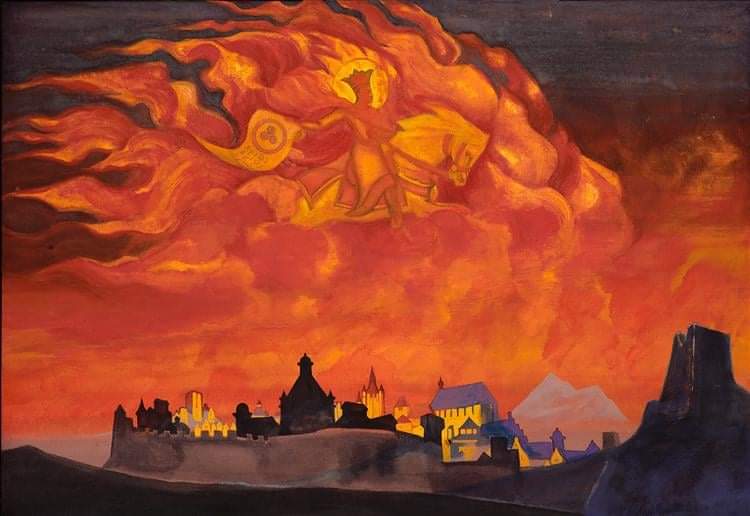
A fiery, ethereal figure of Saint Sophia flying through a vibrant red sky holding the Banner of Peace, symbolizing the protection of culture and wisdom during chaotic times like war. Painting by Nicholas Roerich, 1932

Design Goals

  • Simple Mechanics: Everything can be done using a standard six sided die where uncertaintiy is involved. Rules are made to facilitate play and stay out of the way. You may need to roll the die more than once if you only have one but that’s still all you need. Of course, rolling more dice at once is fun.
  • Player Agency: Players should be able to make informed decisions. Challenges should be overcome by player ability in critical thinking and problem solving, not limited by character skills or special features.
  • Character Ability: Characters can be competent in most of their attempts at exploration given enough time to research and prepare.
  • Materialist: Characters are defined more by the equipment they choose to carry as opposed to fixed roles and set abilities. Some characters may specialize to be better at certain actions but anyone can attempt everything as long as they have the right tools.
  • Material & Diegetic Growth: Characters may gain new strengths through the course of play by participating in in-world events or acquiring near gear.
  • Mortality: The world may severely wound or even kill a character if they make foolish choices. Players should treat the world like it can do this with ease.
  • Rule of Reasonable: Players should engage with the fictional universe and positioning their characters are in to determine what actions are possible. If it makes sense, it can happen with reasonable outcomes.
  • Low Magic: Magic is real but it is neither common nor safe to use.
  • Points of Light: The farther away from civilization — or deeper into a dungeon — you go the more wild, fantastical, and dangerous the world becomes.
  • Cooperative Play: Players should be encouraged to work together towards a shared goal or objective. Lone wolves are usually not compelling in groups.
  • Against “Capitalist Realism”: The world design aims to simulate one that is foreign to ours. It is not a world of merchants, industry, and banks but one of communities and kings — a palatial economy.
  • Anthropocentrism: Player characters are expected to be humans. While elves, dwarves, and other fantasy creatures may exist they are completely alien to the human experience.
  • Emergent Narrative: Characters make their own story but they do not make it as they please; they do not make it under self-selected circumstances, but under circumstances existing already, given and transmitted from the actions of the past.
  • Rules as Framework / Modularity: The rules and procedures presented here are guidelines and are designed to be hacked, changed, dropped, replaced, etc as needed for the needs of each group.

Terminology

There are some common terms and notations that are helpful to understand when playing Now Is The Time Of Monsters.

Dice Notation

  • d6: a regular six-sided die.
  • Xd6: X regular six-sided dice.
  • d66: two six-sided die with one of them representing the tens column and the other the ones column (i.e. a 1 and a 3 is a 13)
  • X-in-6: If something has a X-in-6 chance of succeeding or happening, then a roll of less than or equal to X on a d6 succeeds.
  • Dice Pool: The number of dice available to a character that can be rolled for a specific task, such as fighting, casting a spell, or other activities.
  • Explode: Keep rolling the die until the desired result no longer occurs.

Essential Terms

  • Referee: The person who creates the in-game world, runs the sessions for the Players, determines NPC reactions and risks and chances of success of PC actions. They are impartial to the world and events.
  • Players: The other people playing the game who aren’t the Referee. They control the Player Characters.
  • Player Characters (PCs): The characters created and controlled by the Players.
  • Non-Player Characters (NPCs): Characters not controlled by a Player.
  • Characters: The characters created and controlled by the Players or the Referee.
  • Opponents: Adversaries, human or otherwise. To be avoided, parleyed with, or fought when necessary.

Playing the Game

The following mechanics will give the players and referee the basic tools needed to play the game on adventures.

The Basics

Tests & Contests

There are two types of rolls where the outcome of an action is uncertain. The acting party, either player or referee, rolls 2D:

  • Test: roll equal to or above a target number, typically 7
  • Save: roll equal to or under a target number determined by items and attributes
  • Contest: two or more characters attempt conflicting actions, both roll and compare the results. The higher number wins. Players win on a tie

Advantage and Disadvantage

Situations may be advantageous or disadvantageous to the characters or NPCs, as determined by the referee. You may have more than one source of advantage or disadvantage at a time.

  • Advantage: roll the dice pool twice and use the result of your choice
  • Disadvantage: roll the dice pool twice and use the referee’s choice

Non-combat situations should be resolved automatically if there is more than one net source of advantage or disadvantage.

Attributes

Character abilities are represented by 3 attributes: fortitude, reflex, and will. These attributes are used to save against various ill effects. Saves are either tests against the environment or contests against an opponent’s actions.

  • Fortitude (FOR): physical punishment, constitution, and illness
  • Reflex (REF): agility, reactions, and mental acuity
  • Will (WIL): willpower and mental resilience

Specializations

As characters gain experience and complete tasks, they may become more competent at different adventuring skills and can specialize into different areas. They do not start with any levels in these specializations but may do so as they gain levels or for feats of renown.

Inventory

Characters can comfortably carry bulky items in a total of 10 inventory slots: 1 for each hand, 2 worn on the body, and 6 in a backpack or other similar container or set of containers. Carrying additional bulky items makes a character encumbered.

Characters can swap bulky items carried in their hands with an item in their inventory or on the ground once per round and still act. If they swap more than one item they cannot take other actions that round. Armor and any body slot items, including magical accoutrements or liturgical vestments takes a full turn to don or doff.

Any item that isn’t bulky is petty. These do not contribute to being encumbered but be reasonable about what you’re carrying

Trinkets

Small or minor items like jewlery, clothing, helmets, or cloaks should be tracked separately and character cannot carry or wear more than 5 total before they start counting towards #encumbrance.

Encumbrance

For every item carried over the maximum normal amount, a character’s speed is reduced by 25% (i.e. 10 feet in combat, 60 feet when dungeon crawling, 750 feet when running through a dungeon, and 3 movement points when traveling overland)

Stress and Wounds

A character’s ability to keep adventuring is represented by their stamina and wounds:

  • Stamina: a character’s endurance, energy to continue, and staying power
  • Wounds: the physical hits a character can withstand before being knocked unconscious or dying

Characters must rest to recover lost stamina and wounds.

Stress

Actions and situations which may fatigue, burden, or otherwise overwhelm a character may cause them stress. Stress takes up 1 inventory slot. If all inventory slots are filled with stresses, the character dies.

Time and Actions

Time is measured in the following ways:

Light and Darkness

There are 3 main categories of light:

  • Bright: like daylight, allows characters to perform actions normally
  • Dim: like moonlight, actions relying on visibility are at a disadvantage or take twice as long
  • Darkness: minimal light, as dim light but reading is impossible. Movement and large obstacles are noticed
  • Pitch Black: the complete absence of light and visibility. The common experience in a dungeon

All normal sources of light such as torches, lamps, lanterns, etc. emanate bright light to a radius of 15’, dim light a further 15’ beyond that, and darkness another 15’. Candles provide light for half of that. Bonfires, braziers, and other large or extra intense source emanates light to a radius of twice the normal size.

Size Example Source Light Step
Small Candle 5'
Normal Lamp, torch, or lantern 15'
Large Bonfire, brazier 30'

Dungeon Vision

Some characters, usually non-human NPCs, may have the ability to see in situations other that humans would not be able to. The two main types of this ability that exist are:

  • Heat Vision:
    • Sees thermal output, whether from biological sources or otherwise
    • Blocked by sufficiently thick walls, doors, etc.
    • Many sentient non-humans will have this ability
  • Low-light Vision:
    • See in light as if it were one step higher
    • Has disadvantage on anything involving sight in bright light
    • Most monstrous dungeon denizens will have this ability

Adventuring Gear

Acquiring Items, Goods, & Services

All items have a base rarity (X-in-6 availability) which can be modified by the size and prosperity of a settlement and can be rechecked each month. Available items are shared with the party by settlements if they are in good standing.

  • Common [5]: basic goods found in most settlements
  • Uncommon [3]: items and services typically found in larger towns and cities
  • Rare [1]: available only in the most cosmopolitan or otherwise wealthy areas such as a remote palace

Durability & Consumption

An item’s durability is used to determine if a limited resource is broken, depleted, and generally reliable items are. Items typically have a base durability of 4, meaning they have 4 uses or failures before breaking or running out. Items have an X-in-6 chance of reducing their durability by 1 when used improperly or without care, with X equal to their current durability.

Items with only 1 durability left automatically fail their durability tests.

Test an items durability after a fight for each weapon used and for all armor worn. The referee may also ask you to mark off usage when adventuring gear is used in unusual ways.

Torches & Lanterns

The usage of torches, lanterns, and other light sources automatically reduces by 1 after 6 turns.

Supply

Supply is a meta-item which can be converted into any simple and non-shared adventuring gear or equipment such as a hammer, caltrops, crowbar, or other tool needed in that moment. All items created by supply have a durability of 3

Relics

Relics are items imbued through the powers of belief or magic with magical properties and effects, typically associated with gods, heroes, and villains of myths. Anyone can use a relic if they have identified its activation method. Relics are identified by either testing out the item or by a 1-in-6 chance of knowing what the item is. This chance can be increased by 1 for each book of lore consulted by the party for 1 watch. A relic’s power can still be felt by those in close proximity even if they are unaware of the specific powers.

The effects relics generate are typically one use or for a limited duration, not constant, with limited uses which can be recharged when certain conditions are met or on a timed basis.

Special

Silver and other reagents throughout the world have potent effects against minions of evil or unnatural things. Certain opponents are susceptible to silvered weapons or other items such as holy water or wolfsbane oil. Proper research and preparation can turn otherwise unwinnable fights into all out routs. Silvered and mithril weapons are significantly more rare than normal and have lower durability.

Shared Equipment

Many items such as armor and weapons are for personal use but others are able to be used by the group. So long as one character in a group carries the shared gear all characters are considered to benefit from its usage.

Shared Gear Typically Includes Rarity
Camping Gear Hatchet, tents, flint & tinder, spikes, mallet, bedrolls, rope Uncommon
Climbing Gear Mallet, pitons, rope, grappling hook, harness Rare
Cold Weather Gear Furs, hats, hoods, cloaks Rare
Rations Dried meats and fruits, nuts, hard tack, pots & pans, kettle Common
Watersekins Sealed animal bladders, straps Common

Coins and Currency

Remnants of a lost time, coins of gold, silver, and other precious metals are of no commercial use to society but make acceptable trophies when returned to civilization. These coins are typically melted down and used to create great works of art or adorn churches and palaces as displays of power. Every 250 coins of any metal requires 1 inventory slot.

Combat

When battle breaks out, PCs and NPCs must be prepared to fight. These rules explain how combat should be managed.

  • Actions: most simple actions can be taken during combat. Attack an enemy, cast a spell, flip a table, swap a worn item, or other fast actions
  • Attacks: attacks are decided by rolling Xd6 attack dice (AD) and comparing against the target’s armor
  • Stunts: actions that are not attacks, such as tripping, disarming, or shoving opponents are typically contests between the two combatants
  • Damage: damage is first subtracted from stamina and then wounds. Some damage may affect wounds no matter what such as particularly nefarious sorceries or poisons
  • Damage Multipliers: some PCs and NPCs reduce certain damage in half by resistances or doubled by vulnerabilities
  • Surprise: parties that are not aware of the other at the beginning of an encounter have a 2-in-6 chance of being surprised when meeting

Order of Events

At the beginning of combat, determine initiative. Actions take place in the following phase order according to initiative:

  1. Declare if you will be casting a spell, invoking a mircale, or bracing/charging
  2. Resolve ranged attacks simultaneously
  3. Resolve charges in order
  4. Resolve movement in order
  5. Resolve melee attacks and stunts simultaneously
  6. Resolve spells and mircales simultaneously
  7. Evaluate morale

Initiative

One player rolls 2d6. If you roll or above 7, declare before opponents and move after. If you roll equal to or below 7, declare actions after opponents and move before. Surprised groups automatically lose initiatve

Whenever the side with initiative fails a morale test, initiatve switches.

Morale

Morale (ML) is a representation of an NPC’s discipline and will to fight on. If the roll is above this target, the NPC will flee or surrender. The referee tests the morale of opponents and followers in the following circumstances:

  • When the first champion, leader, etc. (PC or NPC) on their side is killed, knocked unconscious, captured, or flees
  • When their numbers or wounds are reduced to 1/2 of the starting strength (of the overall group or for each individual NPC)

To simplify things, you may roll one moral test and compare it to each relevant NPC’s morale.

Use the higher of the two dice to determine the kind of morale failure that occurs, if any:

d6 Morale Failure
1-2 Surrender: throw down weapons, beg for mercy. Non-sentient opponents are instead routed
3-4 Rout: Every man for himself. Only have to be faster the person next to you. Must sprint
5-6 Tactical Retreat: Automatically rally at the end of the next turn

Movement and Retreat

Characters can move up to 40 feet in a round. Characters wanting to move can either:

  • Pivot: Move only 5 feet and suffer no consequences
  • Run: Move up to your full movement distance and may take one other action. Moving out of melee range of an opponent this way allows a free attack to be made against you immediately
  • Sprint: Move up to twice your full movement distance and may not take other actions. Weapon attacks against sprinting characters have advantage
  • Charge: Move at least 10 feet, up to your 50% more than your movement distance (i.e. 60 feet for most characters), in a straight line at an opponent. You can’t charge through rough terrain

Characters can only attack one opponent moving out of melee range per round.

Characters making ranged attacks after running or in melee range do so with disadvantage.

Charging and Bracing

Characters can choose to charge an enemy at least 10 feet away from them giving them an advantage against that opponent that round if they attack them with a melee weapon. If two characters charge each other, they both gain this benefit and meet halfway.

Characters can brace for a charge if they are not already engaged in melee by not moving. Doing so increases their armor by 1 that round against any opponent that charges them.

Attacks and Damage

All attacks are tests using a dice pool which is equal to your attack dice (AD), known as attacks, and cause damage based on the opponent’s armor. You may divide up the attacks against as many opponents as you would be able to reasonably hit with your weapon. For example, a character with a melee weapon and 5 attack idce can attack one adjacent opponent with 5d6 or up to 5 adjacent opponents with 1d6 for a total of 5 attacks.

For an attack to hit, it must roll above the opponent’s armor. Characters who are knocked prone do not gain the benefits of their armor. Attacks explode on a 6.

Helga is attacking a goblin in melee. Helga has a total of 4 attacking dice from her weapons and renown. The goblin has a crude shield but no actual armor so it has an armor value of 1. Helga rolls a 2, 4, 5, and 4. Since she needs to roll a 3 or higher (base 4-in-6 but the goblin has a shield so it’s 3-in-6) to damage the goblin, she causes 3 damage with the attack. The goblin can choose to sacrifice its shield in defense to prevent the incoming damage but then will not have the shield for any future defense.

Weapons

Weapons add to a character’s attack dice (AD) according to the table below. Modifiers stack.

Weapon Category Attack Dice Rarity Description
Improvised Common One-handed utility weapons like hatchets, knives, or stools
1-handed +1 Uncommon Common handheld weapons of war like axes, hammers, or one-handed swords
2-handed +2 Rare Instruments of war wielded with 2 hands, occasionally with long hafts, like pikes, daneaxes, or longswords
Melee, close +1 Only able to attack targets immediately next to you
Melee, reach Able to attack targets within 2 spaces of you
Ranged, light -1 Thrown or fired weapons like daggers, hunting bows, or blowdarts
Ranged, heavy - Thrown or fired weapons like javelins or warbows
A greatsword is a 2-handed close melee weapon for a total of +3 while a pike has reach so is only +2. A war bow is a 2-handed ranged weapon so its additional attack dice is a total of +1 while a chair leg is an improvised melee weapon for no additional dice.
Stunts

Any attack that hits may be changed into a stunt where an opponent has to make a save or else suffer a negative effect. Example stunts (and accompanying saves) are shown below:

Stunt Save Effect
Disarm REF Opponent loses one weapon held in their hands
Taunt WIL Opponent must attack you or do so with disadvantage until the end of the next round
Shove FOR Push opponent back 5'
Trip FOR Knock opponent prone
Distract WIL Allies attack opponent with advantage until end of the round

Other stunts might be only achievable with certain weapons. Axes or lances can break shields, and clubs, maces, and other blunt weapons can make a helmet worthless, for example.

Armor

A character’s armor is equal to 2 + the number of slots taken up by bulky armor pieces worn. Shields and worn body armor are bulky; helmets are not bulky when worn but are when carried. Lower all worn armor’s durability when the character’s stamina is reduced to 0.

Armor Category Slots Rarity
Light 1 Body Uncommon
Heavy 2 Body Rare
Shield 1 Hand Uncommon
Helmet 1 Inventory / 0 Worn Rare

Shields Will Be Splintered, Helmets Will Be Sundered

Shields can be sacrificed to negate all incoming damage that round. Helmets can be sacrificed to prevent being taken out of action and instead be reduced to 1 wound.

Dying and Out of Action

When a character has no more wounds, they are taken out of action and are considered unconscious. If an out of action character receives help within 1 hour, they can roll on the table below, otherwise they roll on the table with disadvantage. Helping this way takes 1 turn and can only be attempted once. If the character is helped with the use of a field medic kit they make this roll with advantage.

2d6 Out of Action Effect
2-5 Dead: The character dies.
6-10 Wounded: Regain 1 wound and gain 1 stress.
11-12 KO’d: Regain 1 wound.

You may permanently lower your fortitude by 1 to increase your roll on the table above by 1.

Disrupting Magic

Attacking an opponent who is casting a spell or invoking a miracle does so with advantage. If that opponent takes damage, their action is interrupted and resolves with disadvantage on their phase. Attacks made as a result of a character moving out of melee range do not have advantage unless they already would.

Sorcery

The control of base magic, known as sorcery, is only possible for humans to practice under certin conditions. The most common way, for very liberal definitions of common, is to channel it through fine spell powders of crushed gemstone combined and faerie powder (the ground essence of the bones of fae creatures).

The quality of the spell powder is determined by the quality and desirability of the gemstones used to create it. Every full inventory slot worth of gems or faerie powder used adds one durability to the resulting spell powder.

Spells can either be cast in 1 round or in 1 turn. When cast in 1 round, automatically reduce a spell powder’s durability by 1. When cast in 1 or more turns, test the spell powder’s durability. Though all spells are cast automatically, some may allow the target to contest the effect like resisting a charm or dodging an explosion.

Spell powders can also be bound in spell scrolls which are one-use incantations read from a piece of parchment with specific effects pre-determined.

Because all magic requires the use of spell powders, it is known who is casting magic as long as the caster can be seen.

Spell Power

Sorcerers have a dice pool of magic dice (MD) equal to 1 + the number of worn magical accoutrements, on top of any modifiers gained from specialization or adventuring.

Spells have effects based on the sum of the rolled MD and/or the quantity of MD but some magic may have a minimum investment amount. Consult the spellcrafting section below.

Magical Accoutrements

Not every robe, stick, or pointed hat is qualified to be a magical accoutrement capable of boosting a magician’s power; only those specially prepared with spell powders are able to boost a sorcer’s acuities.

Spellcrafting

Sorcery is magic done on the fly.

  1. Invest a number of MD up to your maximum available
  2. Roll the invested MD. They explode on a 6
  3. Note duplicate values for any magical mishaps
  4. Play out the effects of the chosen spell

There are 4 main ways of casting spells:

  • Sculpt Energy covers damaging spells in a wide variety of variations
  • Tricks cover spells that hinder but do not damage opponents
  • Counterspell is a form of defense against magic
  • Practical Magic covers all other magic effects: those affecting the environment and allies

Magical Mishaps

The more powerful a spell, the more likely it is to go wrong when casting. Based on the magic dice used, consequences can occur for unwise sorcerers. These are the consequences when rolling multiples and all affects are cumulative:

  • Doubles: gain stress
  • Triples: can no longer cast magic until finishing a short rest
  • Quadruples: take 1 damage to wounds
  • Quintuples: death

Sculpt Energy

Any sorcerer can cast a bolt of arcane energy. This energy can be sculpted to the spellcaster’s will. The amount of modification depends on the number of MD rolled according to the table below:

Spell Power Base (1 MD) +1 MD (Each) +2 MD (Each) +3 MD (Each)
Range Up to 10 feet Up to 40 feet Within sight -
Duration Instant MD rounds 1 turn MD turns
Targets 1 2 3, Cone Line, Blast
Element None 1 - -
Damage Type Stamina Wound - -
Additional Effects None - Stun (FOR) -

If a spells is chosen to affect targets in a cone, line, or blast, the location will be considered 1 step closer than base (i.e. self, near, far, distant)

  • Cone spells affect the world in a cone radiating 90° from the point of origin to a distance of 15 feet
  • Line spells affect everything in a 5 foot wide line from the point of origin to 40 feet away. You must be able to see the end point, no matter where the point of origin is chosen
  • Blast spells affect everything within a 10 foot radius of the point of origin
Harvald wants to blast the Orc Chieftain, who is standing 60 feet away, gloating at having captured the party. Harvald decides to invest 3 MD. He rolls a 3, 4 and 6. The 6 allows him to roll another MD, which he decides to do: he gets a 4. The orc has an armor of 2 so Harvald hits on a 2-in-6, so he picks the 6 he rolled to succesfully damage the orc. He has up to upgrade the range (within sight) and uses the 3 and a 4. He now has one MD (a 4) left, and uses that to directly target the orc’s wounds. His spell does 1 wound damage, but also causes 1 stress (double 4s).

Tricks

Tricks never deal damage and have a base maximum range of 40 feet and can be used to stun, shove, disarm, trip, hypnotize, etc.

When performing a trick, the sorcerer describes the desired effect. The referee will decide on a fitting save for the target.

MD can be used to enhance tricks. Casting a trick at all costs 1 MD, which can be increased with:

  • Difficulty: For each MD, treat the attribute that the target uses to save as lowered by 1
  • Targets: The trick affects 1 additional target within 10 feet of the original target
  • Distance: Add an additional MD if the target is more than 40 feet from the sorcerer
Harvald now wants to root the 2 goblin archers in place by having the vines under their feet entangle them. He also wants to make sure that they fail so he lowers their attribute by 1. Since there are 2 targets and he is lowering the attribute by 1, this trick will take a total of 3 MD. The referee determines that the goblins need to pass a fortitude save to break free. Harvald uses his 3 MD and rolls 2, 1, and 4. No multiples so everything is good and the goblins will proceed to test their saves.

Counterspell

As part of your round declaration, you can choose to cast a counterspell if an opponent has already declared they will be casting a spell.

Invest and roll an available number of MD, following the normal rules for casting. If the total roll is equal to or higher than the total roll of your opponent’s spell, the opponent’s spell is countered. If the roll is lower than the enemy spell, the counterspell fails and the opponent’s spell takes effect as normal.

You choose the number of MD to invest without knowing the opponent’s investment.

Practical Magic

Any magic that doesn’t do direct damage (sculpt energy) or indirect harm (tricks) can be improvised free-form by simply determining the MD value.

  • 1 MD: A small, personal effect. Could be achieved with tools instead of magic (lighting a torch, growing vines as a rope, making a good first impression)
  • 2 MD: An interpersonal or room-sized effect. Barely beyond the possibility of tools (a small wall of force, breathing underwater, camouflage, sending telepathic messages)
  • 4 MD: Large, “impossible” effects. Makes a mockery of the normal laws of nature (animating the dead or inanimate objects, teleportation within sight, changing forms)
  • 8 MD: Mythical, highly dangerous alterations to reality itself (extending life, creating a geas, teleportation anywhere)

Covens, Circles, & Councils

When 3 or more sorcerers have spent a night ritually merging their powers, they can combine the MD pool of all bonded sorcerers until the dice pool is depleted. They must remain within eyesight and earshot of each other to maintain this benefit. If the link is broken, the remaining MD are divided evenly among magicians. Magical mishaps are applied to all members of this equally.

Spell Scrolls

Spell scrolls are frozen manifestations of magic and can be identified like any other relic. They contain a single spell effect and may be cast from as if casting a spell.

Using Spell Scrolls

To cast a spell from a scroll, you must be able to read the incantation inscribed on the paper aloud and hold it aloft with both hands. Expending the stored power in a scroll takes 1 round. When casting a spell from a scroll, no additional power may be used than that which was originally invested in the scroll when it was scribed. Do not roll for magical mishaps.

Making Spell Scrolls

Spell scrolls can be made by expending one usage of spell powders and writing supplies and sacrificing adequate spell dice until you finish a long rest. Invest spell dice in casting a spell scroll the same as normal which are automatically exhausted at creation. Spell scrolls start with a base amount of spell dice invested when cast, depending on the strength of the spell and the inscriber’s abilities. A spell scroll takes 1 day to inscribe for each spell die invested but does not provoke any magical mishaps.

Miracles

Though they are reluctant to call it magic, the miracles and blessings the Church offers are indistinguishable from sorcery to the laity. However, unlike the capricious sorcery, the Church’s magic is based on ritual and ceremony and as such, all Church Magic requires the use of specially prepared incense and the precise incantation of various benedictions. The burning of this incense is variously said to carry the prayers of the faithful to the heavens, to choke the evil spirits and negative energies in the area, and to purify the desecrated air. Unlike sorcery, however, Church Magic can only be invoked by a truly faithful member of the Church using specially made brass instruments and, though one may not need to be an official member of the clergy to do so, the laity doing this is strongly frowned upon. Those who invoke the Divine this way are known as priests.

Censers and Holy Smokes

While incense can be burned in altars, a traveling or adventuring priest typically carries a censer to disburse the Church’s blessings on a place or populace. Priests are able to invoke the following miracles through holy rituals if carrying a censer or thurible in one or both hands or at a consecrated altar. All miracles may only be attempted once per turn.

Take 1 round to invoke:

  • Bless (BL): Take 1 round to give allies within 40 feet advantage on attacks and saves for the next round
  • Rally (RA): Take 1 round to stop any allies within 40 feet from fleeing and overcome any detrimental magical effects
  • Encourage (EN): Take 1 round to stop any allies that would make a morale test within 40 feet from fleeing and prevent them from being subjected to magical fear effects for 1 turn
  • Rebuke Faeries (RF): Take 1 round to force nearby faeries to leave the area if possible

Take 1 turn to invoke:

  • Consecrate (CO): Renders rotten, poisoned, etc. food and water safe to eat and drink. Make an altar safe to use for holy purposes. Consecrating food and water may only be attempted once, altars may be repeatedly attemped to be cleansed
  • Reveal Faeries (RV): Check for the presence of any faeries, whether current or within the past 2d6 x 4 watches, in a 10 foot by 10 foot square area that you can see
  • Read Omen (RO): Invoke guidance from the Church’s patron. If succesful, the priest may grant advantage on a number of tests equal to 1/2 their DF, rounded up, for the next watch. Your choice of casting bones, reading tea leaves, augury (if birds present), tarot, animal sacrifice, etc.

Divine Favor

A priest’s divine favor (DF) is equal to 1 + the number of liturgical vestments, such as thuribles or mitres, worn or wielded by the character on top of any modifiers gained from specialization or adventuring.

Invoking Miracles

Roll 2d6 and compare to the target number for each miracle. If the roll is over the target number, the miracle is successfully invoked.

DF BL RA EN RF CO RV RO
1 10 8 9 7 10 9 10
2 9 8 8 7 10 8 9
3 8 7 8 6 9 7 8
4 8 7 7 5 8 7 8
5 7 6 7 5 8 6 7
6 7 6 6 4 7 6 7
7 6 5 6 4 7 5 6
8 6 4 5 3 6 5 6
9 5 3 4 3 5 4 5
10+ 4 3 3 2 5 3 4
Rebuke Faerie

If the attempt to rebuke faerie is successful, all faeries within 40 feet are either rebuked (R) or destroyed (D), as determined by the priest’s miracle power and the opponent’s HD according to the table below. On a succesful rebuking, 2d6+DF HD worth of faerie opponents are rebuked for 1 watch, starting with those with the lowest HD. For example, if a priest with 5 MP succesfully invokes this miracle and rolls an 8 (total of 2d6+MP), then 8 HD worth of faeries are rebuked. If any of those opponents are 1 HD then they are automatically destroyed instead of rebuked. Any rebuked faerie will attempt to flee the area and will not harm the priest or their allies in the process and they will continue to avoid the priest if re-encountered in that watch.

MP 1 2 3 4 5 6 7+
1 R R R
2 R R R
3 R R R R
4 R R R R R
5 D R R R R R
6 D D R R R R R
7 D D D R R R R
8 D D D D R R R
9 D D D D D R R
10+ D D D D D D R

Divine Wrath

Though the Church’s patron is an almighty god it is also a parsimonious and jealous one. Attempting to invoke any single type of miracle more than once per watch causes the priest to grapple with the true nature of the divine and must roll a number of d6 equal to 2 + the number of extra miracle invocations this watch. Results for each roll are below:

  • Doubles: gain stress
  • Triples: can no longer invoke miracles until finishing a short rest
  • Quadruples: take 1 damage to wounds
  • Quintuples: death

Followers

Followers are helpers who support you on your travels in exchange for a share of the glory, as determined by a share of the glory (in terms of XP dice) recovered. All followers have 4 pack slots and 2 hand slots; armor in the pack slots counts as worn. In combat, they act when their patrons act. Follower availability is an X-in-6 chance that they are available in a town and should be re-checked at the start of each week in any given settlement. The check should be made with advantage in cities or distadavantage in villages. Followers allow the players to:

  • Stay out of danger
  • Carry more loot
  • Increase capabilities in combat

The common types of followers are:

Hireling Type Availability-in-6 XP Dice Starting Equipment Common Tasks
Porter 5 1/4 Torches, rope Illuminate areas, carry items
Retainers 4 1/2 A shield and one handed close melee weapon or a two handed close melee weapon Provide advantage on patron’s attacks or attack on their own. Can also die in place of their patron for an attack that would take them out of action
Specialists 1 1 A 10’ pole, lockpicks Test for traps, unlock doors and chests, carry items

Loyalty

Loyalty is a measure of a follower’s willingness to follow you. Their loyalty starts at 2d6 and has a maximum of 12. When you ask a follower to perform a dangerous task outside of their job description, roll 2d6. If it is greater than their current loyalty their loyalty lowers by 1. Regardless of the result, their loyalty lowers by 1 (in addition to the previous lowering if applicable). Loyalty can be increased by saving their life, giving extra shares of the glory, or other sacrifices by the patron. Followers will leave when their loyalty reaches 0 at the nearest opportunity.

A follower’s morale is equal to their loyalty

Exploration Procedures

Traveling through the wilderness and exploring dungeons have similar procedures. Characters get a bonus equal to one half the number of empty pack slots to tests for performing stealthy activities (hiding, climbing difficult surfaces, picking pockets) and while orienteering (tracking, replenishing supplies, etc.) (i.e. a character with 2 empty pack slots gets a +1 bonus).

Hazard Clock

To create suspense, add tension, and a pressure to move forward, a hazard clock is used to represent the passing of time and the dangers of dungeons and the wilderness.

  • The clock is known to the players and starts at 20
  • Every turn spent in the dungeon, or watch if traveling overland, the referee should roll 1d6 hazard die and subtract it from the clock
    • For every turn spent without a source of light, roll an extra 1d6 and subtract that from the clock as well
    • In more or less dangerous areas, this roll may be made with advantage (less dangerous) or disadvantage (more dangerous) at the referee’s discretion
  • When the clock goes below zero, an encounter occurs and the clock is reset to 21
  • If the clock goes to exactly zero, it is set to 3
  • Any time the clock hits 3, including from landing on zero and being set there, a foreshadowing event happens - signs of a potential future encounter are seen, heard, smelled, or otherwise noticed by the party
  • When a 6 is rolled on the hazard die, the referee should roll 2d6 and consult the following table for what happens
2d6 Result Dungeon Event Overland Event
2-4 Expenditure Active light sources lose 1 durability Rations and waterskins lose 1 durability
6-10 No Effect
9-12 Change Dungeon shift Weather check (see Referee Tools)

Rests

Characters must rest to keep their overall health up. The two kinds of rests are short and long rests and recover stamina and wounds respectively:

  • Short Rest: Quick recovery of 1 turn to catch your breath, take a drink of water, and recover all lost stamina
  • Long Rest: Characters recover 1 wound and remove 1 stress for each week spent resting in a safe haven

Orienteering

Orienteering refers to overland travel.

Wilderness Exploration Cycle

  1. The referee describes the current region on the map visible to the players. All hex types are visible to their neighbors. Hills are visible from and reveal 2 hexes away, and mountains do the same from 4. Forest hexes reduce their visibilty by half
  2. Players choose travel actions to partake in
  3. The referee narrates the results and then rolls on the overland events table
  4. The players and the referee record any loss of resources and new conditions (i.e. torch use, stress, etc), and the cycle repeats

Travel Actions

The game assumes that you will be playing on a hex map where each hex is approximately 3 mile across, face-to-face. Each watch, adventuring parties can take one of the following actions:

  • Travel:
    • Parties can use 24 move points (MV) per watch counted when moving into and out of a hex
    • Points are halved if using appropriate means like horses or boats and doubled at night and in unsettled weather
    • Move paints may not be roleld over between watches
    • Must be done as a group
  • Search:
    • Search a hex for non-obvious features such as caves, tombs, shipwrecks, springs, etc.
    • A clear hex finds twice the amount of features
    • A disorienting hex makes this a target 7 test
  • Resupply:
    • Refill all usage of waterskins and 1 usage of rations on 3-in-6
    • A plentiful hex makes this roll with advantage
    • A sparse hex makes this roll with disadvantage
  • Make Camp:
    • Set up camp and spend time sleeping and eating
    • Hirelings who do not camp for at least one watch per day lose loyalty
  • Ponder:
    • Smoke some Thinker’s Herbal Compound from a pipe, then ponder reality
    • Ask the referee 1 question about the nature or lore of a person, place, or thing and get a truthful answer
    • Must be done as a group in camp
    • If this action is taken, roll twice on the hazard clock
  • Fortify:
    • Make a camp site safer by setting up temporary defences such as earth mounds, fences, etc.

When traveling, one player should test, on a 1-in-6, to determine if they get lost. When lost, parties must use twice the amount of movement during that watch. Tests made in disorienting terrain are made with disadvantage and with advantage in clear terrain. Following roads, rivers, or other clear paths negates the need for this check.

Terrain Types

Below are the common types of terrain and their characteristics and movement point cost denoted in brackets:

Terrain Type MV Cost Characteristics
Grassland 3 Sparse, Clear
Farmland 3 Plentiful, Clear
Light Forest 6 Plentiful
Dense Forest 9 Plentiful, Disorienting
Hills 6 Clear
Mountains 12 Sparse, Disorienting
Wetlands 9 Plentiful
Badlands 6 Sparse
Open Water 3 Sparse
Desert 3 Sparse, Disorienting

Survival Tests

Each day the characters must test the durability of their shared equipment. For each kind of shared gear that is missing, such as rations, waterskins, camping gear, or cold weather gear where required, each character must test their fortitude, target 7 + 1 for each type of missing gear, or gain stress. Supply can be consumed to prevent failure.

Dungeoneering

Dungeoneering refers to the act of exploring (and looting) a dungeon.

Dungeon Exploration Cycle

  1. The referee describes the party’s surroundings and any obvious immediate dangers (combat, traps, surprises, etc.).
  2. Players then declare their character’s intended movements and actions.
  3. The referee resolves the actions of each character simultaneously, along with any actions that are already in progress.
  4. The players record any loss of resources and any new conditions (i.e. item use, deprivation, etc).
  5. The referee will roll on the hazard clock and, if necessary, roll on any subsequent tables (dungeon or overland events, encounters, etc.).
  6. Repeat the cycle.

Dungeon Actions

Adventuring parties can take one of the following actions each turn while exploring a dungeon:

  • Crawl:
    • Move 240 feet;
    • Moving at this slow pace allows characters to map the area, detect traps, and proceed cautiously.
  • Run:
    • Move 3,000 feet;
    • PCs are automatically surprised when encountering NPCs, will trigger all unknown traps, and cannot map the area;
    • The referee will roll twice on the hazard clock when this action is taken.
  • Search:
    • Search through a room for all hidden, but not secret, features or items;
    • Secrets will be hinted at but not revealed outright.
  • Interact:
    • Interact with your surroundings, other than searching;
    • Disarm a trap;
    • Listen at or unlock a door;
    • Gather resources (mining, harvesting, etc.);
    • Loot the area if it has been searched.
  • Short Rest:
    • Drink water, catch your breath, and take stock of your surroundings;
    • Recover all lost stamina.

Dungeon Elements

  • Darkness:
    • It’s hard to see in the dark and most dungeons do not have any active lighting
    • Some dungeons might be illuminated by magic, bioluminescence, or other means
  • Doors:
    • Doors and entryways may be locked, stuck, or blocked entirely. Characters can try to force a door open (or wedge it shut) using available resources (spikes, glue)
    • The party’s marching order determines who is most impacted by whatever lies beyond a door
    • A character can detect, through careful observation (listening, smelling, etc.), signs of life and other hazards through nearby doors and walls
  • Traps:
    • A cautious character should be presented with any and all information that would allow them the opportunity to avoid springing a trap. An unwitting character will trigger a trap according to the fiction, or otherwise will have a 2-in-6 chance
    • Traps can usually be detected by carefully searching a room
    • Damage from traps is taken from Attributes (usually STR or DEX) and not from HP. Armor can reduce damage, but only if applicable (e.g. a shield would not reduce damage from noxious gas)

Variant Rule: Panic

If a character or follower spends more than 1 turn in pitch darkness in a dungeon, they must make a WIL (character) or loyalty (follower) check or else panic and attempt to flee towards the exit using the run action until they succeed

Diplomacy

(Under construction, but lays out the basics)

For every 1 XP die gained related to advancing or hindering an NPC or faction’s goals, desires, or ambition, increase or decrease their opinion of you by 1. Some actions may affect multiple NPCs factions at once, sometimes in opposite ways. Being a member of a faction may allow any reaction rolls to be made with advantage if not succeed automatically, or the reverse for hostile groups.

The party slays the foul ogrefolk terrorizing the forest and, in doing so, recover a stolen holy relic that they return to the Church. The village and the Church each increase their opinion of you by 1, meanwhile the White Wyrm’s opinion is decreeased by 1 for returning the stolen relic.

The higher the opinion of you, the better. Track the total opinion of a faction towards you and compare to the table below. Effects are cumulative.

Opinion Relationship Effect
-100 Kill on sight
-50 Hostile
-25 Grudged
-10 Rivalry
-5 Grudged
-1 Wary
0 Neutral -
1 Accepting
5 Thankful
10 Welcoming
25 Generous
50 Camaradaerie
100 In Debt

Creating a Character

To create a character, follow these five (or six) simple steps:

  1. Determine their background
  2. Determine a drive to adventure
  3. Place attribute scores
  4. Determine starting equipment
  5. Give your character a punchy name
  6. (Optionally) Roll character traits

Backgrounds

A background helps fill in what a character did before their adventuring life. Roll d66 on the table below for a background or create your own. A character performs actions related to their background either outright or with advantage. It is incredibly uncommon for nobility or those of the broader upper classes to adventure but you can if you want to.

Lower Class Lower Class Lumpen
11 Bricklayer 21 Woodsman 31 Burglar
12 Fisherman 22 Brewer 32 Grave Robber
13 Miner 23 Porter 33 Con Artist
14 Shepherd 24 Gardener 34 Thrall
15 Servant 25 Messenger 35 Prisoner
16 Trapper 26 Farmer 36 Outlaw

Yeoman Intelligentsia Middle Class
41 Squire 51 Functionary 61 Entertainer
42 Manhunter 52 Scribe 62 Mason
43 Militia Drill Sergeant 53 Cartographer 63 Craftsman
44 Border Scout 54 Cantor 64 Courtier
45 Forest Warden 55 Monk 65 Magistrate
46 Herald 56 Healer 66 Alchemist

Drive

Every character has something in their past or in their temperament that forced them from their home and into becoming an adventurer. Players can either come up with a drive on their own with the approval of the referee or use the table on the following page by rolling d66.

Owes a favor to… Lured by… Hunted by…
11 a corrupt noble 21 ancient secrets 31 a vengeful druid
12 a bandit leader 22 unclaimed treasures 32 a jealous faerie
13 a druid circle 23 forbidden knowledge 33 humiliated bandits
14 a rebel faction 24 (un)holy relics 34 vigilantes
15 a religious leader 25 land and freedom 35 a powerful sorcerer
16 an elf prince 26 fame and glory 36 the religious authorities
Enemy of… Fled from… Duty to…
41 a secret society 51 your raided village 61 your family, clan, or tribe
42 a pirate capatain 52 famine or drought 62 a religious order
43 your former master 53 a localized plague 63 an unrequited love
44 an elf prince 54 a bad marriage 64 your former master
45 an influential noble 55 a natural disaster 65 a secret society
46 a beastman warlord 56 a shipwreck 66 a guild or social club

Place Attributes

Characters start with a 5 in one attribute, a 6 in another; the last attribute is 7.

Stamina and Wounds

Characters also start with 3 stamina and 3 wounds.

Character Names

Give your character a short, memorable name like Zelda, Odo, or Andre. Epithets, sobriquets, and titles are earned, not claimed, by accomplishing worthy deeds.

Determine Starting Equipment

All characters begin with adventuring gear, quality and usage 3, either from a starting package or with the randomized method.

Starting Packages

Choose from the following

Adventurer:
Adventurer
Shortsword
Light armor
Torches
Ten-foot pole
Weighted net
Supply
Healer:
Healer
Club
Waterskins
Antitoxin (x2)
Soap
Field medic’s kit (x2)
Hunter:
Hunter
Hunting bow
Skinning knife
Camping gear
Small hunting trap
Supply
Investigator:
Investigator
Close melee weapon
Spyglass
Magnifying glass
Climbing gear
Lockpicks
Mendicant Preacher:
Mendicant Preacher
Walking Staff
Camping gear
Handheld bell
Writing supplies
Rations
Censer
Sorcerer:
Sorcerer
Spell powder
Writing supplies
Spyglass
Dagger
Torches
Treasure Hunter:
Treasure Hunter
Whip
Supply
Writing Supplies
Climbing gear
Book of lore
Warrior:
Warrior
Reach or 2-h close melee weapon
Light armor and shield or helmet
Metal file
Grease
Rations
Field medic’s kit

Random Method

Alternatively, you can determine your starting gear randomly.

Start with two types of adventuring gear. Roll d66 twice to determine which ones. If you roll the same item, you may roll again for the second one.

Gear
11 Antitoxin 21 Chalk 31 Rope ladder, 10'
12 Handheld bell 22 Chisel 32 Manacles
13 Bucket 23 Crowbar 33 Marbles
14 Caltrops 24 Hand drill 34 Metal file
15 Canvas, 5’x5' 25 Glue 35 Handheld mirror
16 Chain, 10' 26 Grease 36 Weighted net
Gear
41 Oil 51 Saw 61 Magnifying glass
42 Lock and key 52 Shovel 62 Small hunting traps
43 Pickaxe 53 Soap 63 Large hunting trap
44 Pole, 10' 54 Iron spikes 64 Twine
45 Writing supplies 55 Spyglass 65 Sealing wax
46 Sandbag 56 Tar 66 Whistle

Roll 2d6 to determine armor type.

2-3 4-5 6-8 9-10 11-12
Light armor and helmet Light armor No armor Shield Light armor and shield

Roll 2d6 to determine weapons.

2-3 4-5 6-8 9-10 11-12
Heavy ranged weapon Light ranged weapon Close melee weapon Reach melee weapon Close melee and light ranged weapon

Roll d6 to determine shared gear.

1 2 3 4 5 6
Climbing gear Rations Torches Waterskins Camping gear Writing supplies

Roll 2d6 to determine a specialty item.

2 3-5 6-8 9-11 12
Blue spell powder Lockpicks Field medic’s kit Book of lore Censer

Character Advancement

Levels are a measure of a character’s achievements, fame or infamy, and renown. Characters start at level 1.

Experience Pool: Whenever a party does something of note, add one die to the Experience Pool (XP). These dice are used to gain levels. Examples of when to grant an XP die:

  • Bringing a trophy back from a dungeon
  • Freeing hostages or prisoners
  • Winning or bypassing difficult fights (extra points for creative solutions)
  • Solving a dungeon puzzle or riddle
  • Discovering a location, fact, technology, or other novel lore which advances the game

Gain an additional XP die when completing any of the above in accordance with your character’s drive.

Trophies are any great works of art or artifacts the characters return from the wilderness or the enemy camp to civilization. They are typically large or otherwise impractical to carry normally. Trophies may also be parts from monsters like a dragon’s tooth or troll’s head. Coins are converted to currency at the following rate:

Metal Minimum Quantity to count as Trophies
Platinum 500
Gold 1,000
Electrum 2,000
Silver 5,000
Copper 8,000

Gaining Levels

Whenever the party returns to civilization, any character take XP dice from the pool to attempt to gain a level. In order to gain a level, characters need to roll equal to or higher than their level 4 times. If any part of an XP die is given to a follower as payment, it cannot be used by a character.

When gaining a level, characters may choose two of the following advancements:

  • Increase stamina by 1
  • Increase wounds by 2
  • Increase one attribute by 1 to a maximum of 9
  • Increase a specialization by 1

Epithets

An epithet reflects a character’s in-game achievements and grant them mythopoeic bonuses. Characters can only have one active epithet at a time and can choose which one to go by after a long rest in a settlement. Some epithets may be mutually exclusive, i.e. earning one will cancel another.

Example epithets might be:

The Dragonslayer

  • Gain: Bring proof of killing a dragon (such as a head) back to a settlement
  • Lose: Decline to assist a settlement in fighting off a monster, regardless of if it is a dragon or not
  • Benefit: Characters gain +1 stamina, +2 wounds, and +1 to dice pools for attacks, spells, miracles, etc. for actions against dragons

The Diplomat

  • Gain: Achieve welcoming or higher status with two or more major factions
  • Lose: Lose that status or have two or more major factions hold a grudge against you
  • Benefit: Encounter disposition checks are rolled with advantage

The Inquisitor

  • Gain: Become inducted by the One True Church with a mission to root out heresy, apostasy, and all those working against the Brazen God
  • Lose: Refuse a mission, allow heresy to flourish
  • Benefit: Gain +1 DF

Witch-Breaker

  • Gain: Kill 3 casters (sorcerers, wizards, druids, witches, etc.)
  • Lose: Do not attack an opponent caster when able to
  • Benefit: Roll saves against magic with advantage. Roll attacks against casters with advantage

Cloak-Dancer

  • Gain: Challenge champion, captain, etc. opponents to a duel 3 times and win
  • Lose: Never refuse a duel, do not go more than 1 battle without challenging for a duel (i.e. at least every other battle) where possible (e.g. if there is nobody worth challenging it doesn’t count)
  • Benefit: Gain +1 attack and roll attacks with advantage when next to only one opponent and no allies are next to that opponent

Rulership Mechanics

Under Construction

Ideas:

  • warbands no longer require trophies
  • warbands can now heal (i.e. recover wounded and recruit new members)
  • roll with advantage when checking for new warbands
  • specialty warbands?
  • increases majesty
  • domain events (natural disasters, plentiful harvests, etc)

Establishing Domains

  1. Conquer, claim, or be granted a region to administer, rule, etc.
  2. Construct a stronghold
  3. Clear the area of any monster lairs
  4. Invite settlers

Domain Management

Majesty

Great heroes wear the finest gear. Symbols of office, such as crowns, Church vestments of sufficient rank, ancient runestaves, or other similar artifacts

A character has a majesty equal to the sum of:

Symbols of Office

Symbols of office vary, depending on their relation to a ruler or faction. Examples of symbols of office would be:

  • A crown, mitre, or diadem of historic significance
  • A weapon of legend believed to have been owned by a once and future king
  • Jewel-encrusted banners of a mythical dynasty
  • Elaborate surcoats befitting a noble, sorcerer-lord, or high-ranking cleric

Strongholds

Under Construction

Ideas:

  • warbands no longer require trophies
  • warbands can now heal (i.e. recover wounded and recruit new members)
  • roll with advantage when checking for new warbands
  • specialty warbands?
  • increases majesty
  • domain events (natural disasters, plentiful harvests, etc)

Establishing Domains

  1. Conquer, claim, or be granted a region to administer, rule, etc.
  2. Construct a stronghold
  3. Clear the area of any monster lairs
  4. Invite settlers

Strongholds

Types of Strongholds

Type Typical Users Benefits
Keep Fighters, Warlords, Rangers
Abbey Priests, Paladins, etc.
Henge Druids, Sorcerers
Sorcerer Tower Sorcerers

Domain Management

Warbands

_Pretty sure I’m just going to say to use Hellmarch but may need to instead incorporate some of it into the below

Now that you have a stronghold, you need to defend it. Warbands are groups of warriors under a character’s command, divided up into regiments, recruited in settlements ruled by characters or their liege (with permission).

Regiments

Regiments have between 12 and 24 warriors, based on type. Regiments do not have inventory slots and do not need to worry about other items. Characters can command a number of regiments equal to 1 + their majesty; hero NPCs do not count towards this limit.

Regiments come in 9 different types: light, medium, or heavy variants of ranged, melee, or cavalry.

Weight Melee Ranged Cavalry
Light Javelins, spear, shield Slings, shield Spear, sword, sheild
Medium +Axe Bow, armor Spear, sword, armor, shield
Heavy +Armor, +2h axe Bow, armor, pavise Lance, sword, armor, shield, helmet

Traits

Regiment Availability

At the start of each month, or when first visiting a settlement, the referee should roll d66 a number times dependent on settlement size to determine which regiments are able to be raised.

Settlement Type Number of Regiments
Village -
Town 1
City 2
Metropolis 3
d66 d66 Regiment d66
11 Light Melee 21 Light Ranged 31 Light Melee
12 Light Melee 22 Light Ranged 32 Light Melee
13 Light Melee 23 Light Ranged 33 Light Melee
14 Light Melee 24 Light Ranged 34 Light Ranged
15 Light Melee 25 Light Ranged 35 Light Ranged
16 Light Melee 26 Light Ranged 36 Light Ranged
d66 d66 Regiment d66
41 Medium Melee 51 Medium Ranged 61 Heavy Melee
42 Medium Melee 52 Medium Ranged 62 Heavy Melee
43 Medium Melee 53 Medium Ranged 63 Heavy Melee
44 Medium Melee 54 Medium Ranged 64 Heavy Ranged
46 Light Cavalry 56 Medium Cavalry 66 Heavy Ranged
45 Light Cavalry 55 Medium Cavalry 65 Heavy Cavalry

Optional Rule - Regiment Traits

To add more personality to various recruited regiments, the referee can roll 2d6 to determine what additional traits it has

2d6 Additional Trait
2 Meek
3 Cowardly
4 Defensive
5 Reckless
6 -
7 -
8 -
9 Defiant
10 Resolute
11 Marine
12 Brutal

Regiments start with basic traits but others may be acquired over the course of a campaign.

  • Brutal: Reroll 1s when attacking. Do not keep rerolling
  • Charger: When charging, all attacks are made with advantage and enemies make morale checks with disadvantage
  • Cowardly: Makes morale checks with disadvantage
  • Defiant: Can counter-charge when charged to meet the opposing regiment halfway. Both groups gain the benefit of a charge
  • Defensive: Cannot charge
  • Flaming Arrows: May make ranged attacks with disadvantage to have enemies make morale checks with disadvantage
  • Heavy: Cannot move through difficult terrain
  • Marine: Does not suffer any disadvantages when fighting on a ship
  • Meek: Attack rolls of 6 do not explode
  • Mobile: Ignore difficult terrain when moving
  • Prepared: When charged, can make a ranged attack on the charging regiment as long as it is within range and not on a flank
  • Reckless: Must charge if able to
  • Resolute: Makes morale checks with advantage
  • Shieldwall: May enter a defensive stance to move at half speed but all attacks against it are made with disadvantage
  • Stealthy: Cannot be targeted by ranged attacks when in dificult terrain such as forests or cover

Mass Combat

Attacks are made as normal (attack dice vs armor).

Solo characters, usually but not only a plyer character, attacking warbands do so with disadvantage.

Court

Under Construction

Now that you have a stronghold, you’ll be expected to adjudicate disputes, crimes, etc. Here’s how you do that

Gazetteer

Centuries have passed since the retreat of the Empire from these lands. Petty nobility cling to power with the support of the priests of the One True Church of the Brazen God. Foreign warlords and bandits stake out pieces of land to rule as their own.

Faeries, once thought to have been driven from the realm a millennia ago, have been sighted deep within the forests. Monsters of all sorts have begun encroaching closer and closer to civilization, overrunning fortresses, abbeys, and everything they can get their claws on. Rumors of vengeful undead abound.

Roads lie unpatrolled, watchtowers vacant. Ruins and relics of the old powers are scattered across the land, waiting to be recovered. The people cry out for saviors from this wretched existence. Glory, power, and immortality await those who would help push back the coming darkness.

Will you take up the call?

Factions

With the realm in disarray, remnants of the older order, ancient Each one aspires to claim sole dominion over the land and seeks champions to exert their influence in exchange for title, renown, and plunder. Will you pick a side or forge your own path?

The Empire in Retreat

Called back across the narrow Channel to deal with troubles closer to home four centuries ago, the Imperial forces based in the city of Brughes seek nothing more than to re-establish rule over the lands they once pacified. Due to internal squabbling, the Empire has not yet been able to muster sufficient or more than temporary overlordship.

The Free Kings of Loegyr

Based in the remaining coastal cities and the mountain redoubt of Dun Guldur, the so-called Kings of the various small fiefdoms claim dominion over their small realms. Once proud members of the Empire, these warlords-in-all-but-name provide protection as best they can from the horrors that exist far from their capitals.

The One True Church of the Brazen God

The One True Church of Mithras, the Brazen God. Once synonymous with Imperial authority, it now exists independent of the distant hierarchs in The City. The Church grants legitimacy to would-be rulers for their piety and obedience, though often the wishes of these Magistracies are at odds with the local rulers. Many lost abbeys, chapels, and relics are awaiting recovery for those brave and pious enough to face the darkness of this wild land.

Foreign Invaders

Hailing from across the seas to the east, these have established a settlement in the ruins of a former outpost on an island they call Svaerten. Descendents of outcasts, criminals, and raiders, they are attempting to exert influence in the area and seek to colonize the once-wealthy land and create a legitimate kingdom all their own.

Orks, the semi-nomadic barbarians from the north known for their blue warpaints, have settled in an encampent north of the Wash. Led by Queen Buddug, will they attempt to expand ever southward? Lend their spears where spoils are the best? Or will they seek a more peaceful existence with the other claimaints?

Faerie and the Eldar

The Eldar were the original inhabitants of Loegyr but were driven into exile in a parallel plane of existence, known as Faerie, during a series of crusades led by the Church and the Empire that are now known as the Faerie Wars as part of their conquest of the peninsula. With the decline of the Empire and the waning power of the Church, rumors of the Eldar resurgent abound. Prominent Eldar Princes include:

  • The Cold Prince, Winterlord
  • Morgana, preeminent sorceress
  • The Witch-King
  • Queen Mab, Mother of Wolves

Major Locations

Safehavens

Ilpenter

Caer Darra

Caer Fflot

Cardencot

Dun Guldur

The Mainland

Brughes

Foreigners

Svaerten

Orks

Wilderness

The Aelderwald

The Barrowlands

The Wash

The Greyspire Peaks

Aelfhame

Wytchwood

Referee Tools

Now that the players can play the game, here’s stuff for the referee to adjudicate, create, and adapt.

Referee Advice

Blah blah

Exploration Procedures

Encounters

Wandering monsters or other NPCs are encountered at the following distances moving towards the party:

  • Dungeon: 2d6 x 10 feet
  • Overland: 4d6 x 30 feet

When an encounter starts, the referee must determine surprise. The referee and 1 player each check on a 2-in-6 chance if that side is surprised.

NPC Dispositions

Referees can determine the reaction of any encountered NPCs using the table below or as befits the situation:

2d6 Disposition
2-3 Hostile
4-5 Wary
6-8 Neutral
9-10 Curious
11-12 Friendly

Weather

When indicated by the overland hazard clock, the weather may change. First, check for changes in weather by rolling 3d6 to see if the weather pattern has changed:

3d6 Settled Weather Unsettled Weather
3-8 Weather becomes unsettled No change
9-18 No change Weather settles

Then, determine any changed weather. When weather changes from settled to unsettled and each day the weather remains unsettled, roll 3d6 on the tables below to determine the new weather pattern.

Settled weather pattern (roll first day of settled weather only)

3d6 Winter Spring Summer Fall
3-8 Cold & foggy Cool & foggy Cool & cloudy Cool & foggy
9-10 Cold & clear Cool & clear Warm & clear Cool & clear
11-12 Cool & clear Warm & clear Hot & clear Warm & clear
13-18 Cool & cloudy Warm & cloudy Warm & cloudy Warm & cloudy

Unsettled weather patterns (roll each day of unsettled weather)

3d6 Winter Spring Summer Fall
3-8 Cold fog Clear & dry Clear & dry Clear & dry
9-10 Flurries Cool drizzle Sun showers Cool drizzle
11-12 Driving snow Intense rain Rain & wind Intense rain
13-18 Blizzard Thunderstorm Thunderstorm Thunderstorm

Opponents

Players will need opponents to fight, parlay with, and generally get in their way. These are their stories.

The primary statistic of an opponent is the Hit Die (HD) which determines their stamina and wounds at 2S+1W per HD. Opponents with 0 HD have 1W only.

Opponents deal and take damage based on their weapons and armor just as player characters would. Some may have one or more special ability like a fire-breathing dragon or terror inducing undead. Some opponents are mooks and are killed after 1 hit regardless.

Creating an Opponent

Opponents can be quickly created using a combination of templates and additional abilities. You can also create them using the normal player mechanics if you want.

Templates

Template Name Summary HD Armor ML F/R/W Attack Dice # Appearing Special Abilities Example Creatures
Mook Disposable cannon fodder. There to distract and overwhelm 0 2 5 6/6/6 1 2d6 Minion: If a captain is alive and not fleeing, uses their ML Goblins, zombies, bandit or any threat that relies on numbers
Basic A coordinated predator that grows bolder and deadlier in a pack 1 2 7 6/7/5 1 1d6+1 Strength in numbers: When 2 or more allies attack the same target, add an extra AD for each adjacent ally Bandit gangs, goblin leaders, velociraptors, wolves, or any coordinated group of attackers
Brute A solitary powerhouse that gets deadlier when wounded 3 3 8 8/6/5 4 1-3 Fury: When reduced to 0 W, makes a WIL save. On success, regains 1W and becomes enraged (attacks with advantage) Ogres, trolls, lone barbarians, cave beasts, or any solo brute-force threat
Giant A living siege weapon—unstoppable and ruinous when provoked 4 4 8 9/5/5 5 1 Slam: 2d6 damage (1/2 on FOR save), blast, near. Failed FOR save also knocks prone. Recharges on 2-in-6 each round. Telegraphed 1 turn in advance Giants, siege beasts, war constructs, ents/treants, or any massive, destructive force
Charger A thundering force of muscle and momentum, explosive and wild 2 3 7 8/6/5 2 1-3 Trample: Can charge through an enemy, knocking them prone on a failed FOR save Boars, minotaurs, large scarab beetles, knights on horseback, or any threat that relies on momentum and charging
Ambusher A stealthy, devastating ambusher with the power to drop foes in a single strike 3 2 6 6/9/5 2 1d6 Ambush: Attacks from shadows or surprise have twice as much AD. Can move without provoking free attacks Tigers and other large felines, crocodiles (in water), jungle stalkers, griffons (flying), skilled assassins, dangerous predators
Skirmisher Mobile harassers that confuse, distract, and chip away from above 2 2 6 6/9/5 1 1d6 Speedy: Can move 60 feet in one round. Has 2 extra AD if it moves before attacking Vultures, eagles, harpies, gargoyles, flying imps, or any highly mobile threat
Trapper A lurking threat that thrives when its victims are caught or trapped 2 2 7 5/8/7 1 1d6 Ensnare: Weighs an opponent down with a weighted net, web, etc on a failed REF save. Attacks it makes against this opponent have 2 extra AD Insects, web-spinning demons, saboteurs/trappers, mimics, cursed relics
Swarms Weak individually, but together they overwhelm, spread disease, and wear you down 2 2 8 5/9/5 2 1-2 Diseased: Any creature damaged receives 1 fatigue on a failed FOR save. Swarms of creatures, usually insects, rats, piranha, or similar
Artillery Opponents that rely on ranged splash damage, typically of a booming variety 2 2 8 7/7/5 1 1-2 Kaboom: 2d6 damage (1/2 on REF save) either blast, line, or cone which recharges on 2, 3, or 4-in-6 respectively. Grenadiers, flamethrowers, or acid spitting bugs
Dragon A legendary apex threat with devastating attacks and fearsome presence 6 5 10 9/7/7 6 1 Breath weapon: 3d6 elemental damage (1/2 on REF save), cone or line. Recharges on 2-in-6 each round. Telegraphed 1 turn in advance Dragons, demon lords, ancient guardians, or any legendary-tier threat
Wizard Solo wielders of the arcane, usually of a supernatural variety 4 4 8 7/7/9 2 1 Mystic Theurge: Can cast spells as a sorcerer with 6 MD. Wizards, necromancers, cult leaders, etc.

Additional Abilities

Here are some additional abilities to make the above templates more specific for the opponent in question.

  • Amphibious: can move and breathe normally underwater
  • Dreadful Presence: opponents within 5 feet must pass a WIL save or have disadvantage on all dice rolls
  • Fey: takes double damage from mithril weapons
  • Flying: can fly in a non-enclosed space up to its movement speed
  • Heat Vision: sees thermal output, whether from biological sources or otherwise. Blocked by sufficiently thick walls, doors, etc.;
  • Immunity: immune to one or more effects or damage
  • Inspiring Presence: allies who can see you test morale with advantage
  • Low-light Vision: see in dim light as if bright, in darkness as if in dim light, and in bright light has disadvantage on anything involving sight.
  • Lycanthrope: takes double damage from silver weapons
  • Poisonous: all attacks directly target wounds
  • Regenerates: recovers 1 wound at the start of the round unless it took damage from fire or acid
  • Sorcerer: has a number of MD equal to its HD
  • Undead: automatically passes any WIL saves. On a failed morale test, take damage to wounds equal to the difference (e.g. a roll of 8 with morale 6 causes 2 damage)

Opponents from Other Games

Other games exist for some reason. Might as well use their bestiaries for ideas. Or if you’re running an adventure from them, this is how you can convert on the fly.

Converting Opponents from OSR Games

  • Keep HD the same
  • If wearing lighter armor, such as leather, give 1 AV
  • If wearing heavier armor, such as chainmail or plate, give 2 AV
  • If it has magical protections or natural armor like a chitinous carapace or dragon scales, consider giving it higher AV as appropriate.
  • Some opponents have attacks that hit harder than they would otherwise by the base rules and should be noted.
  • Keep any immunities, resistances, or vulnerabilities

Converting Opponents from Other Games

  • Fiction first. Do what makes sense in terms of the world, not balance
  • Weaker opponents should be goons, average opponents should have 1 HD, tougher or harder to kill opponents should have 3 or more HD
  • If wearing lighter armor, give 3 armor
  • If wearing heavier armor give 4 armor
  • If it has magical protections or natural armor like a chitinous carapace or dragon scales, consider giving it higher armor as appropriate.

Reliquary

Below is a sample list of relics, or magic items, that players can discover through the course of the game.

Some relics will have a limimted number of uses (referred to as charges) before their magic is depleted. Some of these can then be recharged, the condition for which will be noted with the relic.

A Blade Called Hope (1h melee, close)

  • A thin, curved sword that glows with faint light, visible only in total darkness. Attacks are made with advantage when no other light is on the blade.

Assassin’s Goblets

  • A pair of fragile wine flutes. Any liquid poured into one is swapped with the other.

Babbleflask, 2 charges

  • A foreign language is automatically understood and can be spoken back with fluency, so long as the drinker’s native tongue is neither spoken nor heard.

Barbed Epaulets, +1 Armor

  • Spiked shoulder pads that poison anyone that touches them (FOR save or lose consciousness for 1 turn).

Betterwand, 2 charges

  • Vibrates with increased intensity when pointed at the best of a series of objects.
  • Recharge: Willingly accept a poor deal or trade while in possession of the wand.

Bloodmap, 1 charge

  • A blank leather parchment that absorbs any blood spilled on its surface before rolling into a tight scroll. Unroll to see a rough map revealing the current location of any remaining blood. The image disappears after a few minutes.
  • Recharge: Pour a pint of your own life essence onto the map, blood for blood. You gain stress until you can make camp or take a long rest.

Dryad’s Tear, 1 use

  • Shatter this crystal to merge minds with a tree you can touch. You can perceive the goings-on within whatever forest that tree belongs to.

Empathy Rod, 3 charges

  • When two creatures touch this wooden pole at the same time, their physical and emotional states become fully intertwined until they let go.
  • Recharge: Give the rod to a former enemy as a gift. This is a one-way transaction.

Endowment of the Faerie Prince

  • You may see through a target creature’s eyes and also learn its greatest desire. The target makes a WIL save to resist. You also make a WIL save. On a failure, your target’s greateset desire becomes your greatest desire.

Eyestone, 3 charges

  • Choose an object created by living creatures. You can sense the nearest example.
  • Recharge: Place in a bucket of rainwater overnight.

Falconstone, 3 charges

  • Perceive the world through the eyes and ears of a nearby bird of prey. You feel whatever it feels but have no control over it.
  • Recharge: Kill and eat a common quarry, cooking the meat alongside the stone.

Footpad’s Friend

  • Soft leather shoes that adapt to fit any foot size. Leave behind footprints that scatter and turn in a confusing manner, making tracking nigh-impossible.

Gate Chalk, 1 use

  • Draw a doorway on any flat surface to open a one-way passage to the faerie realm. Good luck.
  • Recharge: soak it in the blood of an elf for 1 turn.

Golden Wheat Paste, 2 charges

  • When mixed with water, this substance chemically bonds any two objects.

Gossip Box, 1 charge

  • Wind the crank to replay any sound made in the past day in your current location. Each crank goes back one hour.
  • Recharge: Successfully spread one falsehood in the presence of the box.

Harbinger’s Bell, 1 charge

  • Hang at chest height to ring when danger is imminent.
  • Recharge: Melt and reforge. Each time it breaks forever on a 2-in-6.

Homunculus Nail, 1 charge

  • Prick a finger with the pointy end and hammer into any small object to form a loyal servant [1 HD, 3 FOR, 8 REF, 5 WIL] completely devoted to you. If not destroyed, it will outlive you.

Honest Earworm, 1 use

  • A foul-smelling, pinky sized worm that feeds on earwax by crawling into the ear canal of a sleeping person. The victim then loses the ability to lie for 1d4 hours.

Index Stone

  • Allows you to teleport from the matching wyrdway portal to any other portal you have discovered.

Jar of Ants

  • Break to release a colony of fire ants (swarm) that will follow your orders as their queen. Consumes a ration durability every two days.

Last Breath (2h melee, close), 1 charge

  • A chipped daneaxe of dubious quality. Drive into the earth to form a 5 foot diameter crystal dome that encircles and immobilizes the wielder, other than lifting it. The dome is impenetrable by mundane objects, and shatters once the axe is lifted again.
  • Recharge: Deliver a killing blow with the sword, absorbing the dying victim’s soul into the blade. There is a cunning intelligence within that speaks to the wielder, forever asking for more souls, more!

Libations of Hospitality, 1 charge

  • When offered to something sentinet not actively hostile to you (i.e. in combat), it must accept the gift of sharing a drink until the bottle is finished, during which time you are free to talk, parlay, and negotiate as necessary. This drink does not taste good but it gets the job done.

Lightsucker Candle, 3 charge

  • Once lit, this black tallow wax sheds darkness rather than light, even in the brightest of days.

Lover’s Covenant, 1 charge

  • A bottle of red-tinted ink, a broken heart emblazoned on the front. Write up a contract of any length. Any who sign are bound to obey by penalty of death.

Mace of the Kingslayer (2h melee, close), 2 charges

  • Hold the weapon aloft and shout an order or declaration. Any who fail a WIL save must obey, against their better judgment.
  • Recharge: Deliver a fatal blow to the leader of a group or faction.

Moth Mirror

  • A full-length, double-sided glass mirror. Step into the mirror to be transported to another mirror you know. You come out of the other side as an enormous swarm of buzzing moths, striking those around you with paralysis (WIL save to avoid) as they gaze upon you in horror. You can revert to your normal form at will. The mirror only operates in one direction.

Muffle Dust, 2 charges

  • A pouch of fine dust that muffles all sound in a 40ft radius when scattered.

Nightstone, 1 charge

  • Rare moon-shaped stones dredged from underwater caves and jungle dolines. Swallow whole to relieve all stress as if you had a good night’s sleep and a good meal. The stone will eventually pass through your system. It isn’t fun.

Obliteration Scroll, 1 charge

  • A single-page document filled with gibberish. Sign anywhere on the page to remove any knowledge of your existence from this plane of reality. No one will know or remember you, and any references to your name or lineage will vanish. The scroll disappears in a puff of smoke that smells faintly of sulfur.

Parliament’s Promise, +1 Armor

  • A helmet in the form of an owl’s head. Its wearer can twist their head around like an owl and gains low light vision. While wearing the helm, the wearer loses the ability to speak, uttering only the simplest of cooing noises.

Phoenix Ash, 1 charge

  • Sprinkle over a corpse to resurrect the deceased. They return with full health but no memory of their past life.

Ring of the Snake, 1 charge

  • A wrought-iron serpent ring. Place it on your finger and fall into a sleep so deep that most will think you are dead. If the ring is removed, you will awaken feeling refreshed. Otherwise, the effect will wear off after one month.
  • Recharge: Bury the ring with a corpse. A month later, exhume the corpse and retrieve it.

Roc Feather, 1 charge

  • Hold while falling to float safely to the ground from any height.

Skull Whistle, 3 charges

  • Produces a chilling scream that forces any who hear it (including the blower) to make a WIL save or become temporarily incapacitated.
  • Recharge: Feed the instrument a clump of human hair pulled from a living skull.

Soul Clump

  • A hard, fist-sized ball covered in small bumps. When rolled on a flat surface, it collects any objects smaller than its current mass, which subsequently increases as more items are attached to its surface. Only living creatures are immune.

Spystone, 1 charge

  • A smooth, flat stone that is slightly warm to the touch. Squeeze to record audio in a 40ft radius. Squeeze again to play it back, as many times as you like.
  • Recharge: To record a new sound, skip the rock at least three times on a body of water and recover it.

Sticky Rope, 1 charge

  • A 100ft rope that can stick to any surface.
  • Recharge: Cut off 10ft of rope, which then withers away.

Stone Eater, 1 charge

  • A rodent-sized centipede that consumes and digests stone, capable of cutting a small tunnel in under an hour. It can be used more than once, but only if you can catch it (DEX 18).

Stonewax Gum, 3 charges

  • Chew, then spit. The gum will harden and stretch, making a perfect, unbreakable seal.

Sponge Army, 1 charge

  • A dozen miniature soldiers made of carved sea sponges. When splashed with water, they grow to full size [basic opponent template] and follow the orders of the person they see until they are destroyed or dry out completely (2 turns).

Tupshead Crown, +2 Attacks

  • A beautifully rendered ram’s head helm wrought from tough alpine oak. The horns can be used as weapons.

Veilsilk Grip, 1 charge

  • A hand wearing this glove can phase through solid objects.
  • Recharge: Snip off one of the fingers.

Voice of the Mountain, 1 charge

  • A rough pebble imbued with the essence of a mountain spirit. Crush to call forth an earthquake or similar natural disaster. Do not expect to be spared.

Ward Stone, 1 charge

  • A flat, unassuming river stone notched with faded symbols. Smash to release a silvery powder in a 20ft radius that pacifies anyone who breathes it.

Whispergale, 1 charge

  • A balloon-shaped plant that captures a spoken message and delivers it to a location within a day’s walk.

Whistle-Rope

  • 15 feet of highly flexible leather. Swirl in the air to generate a powerful subsonic effect that drives away wildlife. Also works underwater.

Wonder Bar, 1 charge

  • Pressing the switch on the side of this iron bar freezes it in place, even in midair. Once frozen, it cannot be moved by any force until the switch is depressed.
  • Recharge: Hold the bar with both hands without letting go for one continuous hour (WIL save to succeed). You can make only one attempt each day.

Wraith Lantern, 1 charge

  • Write someone’s name onto its glass, and the name will disappear. The lantern reveals a path to their current location, visible only to the holder (day or night).
  • Recharge: Kill the last person found with the help of the lantern, trapping their spirit inside. The lantern must be nearby when they are killed.

Encounter Tables

General formula is:

  • 2 is always a dragon
  • 12 is always a wizard
  • 7 is a random monster
  • 3-6 is region/faction specific
  • 8-11 is universal world encounters

3-6

6, 5, 4, and 3 are for threats tied to specific locations. This usually refers to the factional territories the party must travel through in order to get anywhere, but it might also mean levels of a dungeon, regional biomes, depth beneath the surface of the sea, etc. Whatever boundaries are important for the players to understand in your setting, you can help emphasize them with this. On one side of a boundary the players fight goblins, on the other they fight flying devil sharks with tornado breath weapons.

8-11

8, 9, 10, and 11 are for universal threats. Stuff that could appear anywhere and any time without being out of place. The further they get from 7, the more wild they can be. So while 8 might be a rabid dog or a hungry bandit, 11 is going to be something like a void vampire or a spell-starved lich.

Generic Encounter Table Structure

2d6 Encounter
2 Dragon
3 [Region, Elite]
4 [Region, Dangerous]
5 [Region, Rare]
6 [Region, Common]
7 Recurring Travelling NPC
8 [Generic, Common]
9 [Generic, Rare]
10 [Generic, Weird]
11 [Generic, Weirder]
12 Wizard

Acknowledgements

These are games, blogs, and books I have used for inspiration or borrowed from to make my own fantasy heartbreaker, in no particular order. I’m sure there’s plenty of others I found and used but can’t remember exactly where that brain worm came from.

  • Ben Milton for Knave and Maze Rats with their simplicity, concision, and ingenuity
  • Gavin Norman for Old-School Essentials for setting the gold standard in layout and for Dolmenwood’s wonderful weirdness
  • The Rise Up Comus blog for introducing me to diegetic feats
  • Mausritter for the tactile inventory
  • Prismatic Wasteland for the XP pool mechanic
  • Block, Dodge, Parry for the sorcery mechanic
  • Arnold K for the basis of hirelings
  • Flagrant Factions (Wolves Upon The Coast supplement version) for the warbands and regiments framework and some epithets
  • Antonio Gramsci for giving one of the best RPG names as a description of the stuggle between socialism and barbarism

My Appendix N:

  • The Witcher (TV version, haven’t played the games)
  • Dolmenwood / Wormskin
  • Skyrim
  • Beowulf
  • The Wanderer
  • Vikings (the TV show)
  • The Last Kingdom (the TV show)
  • Into the Wyrd and Wild
  • Herknungr
  • Y Gododdin
  • Le Morte d’Arthur
  • Thrones of Britannia: A Total War Saga
  • Icelandic Sagas